Solenoid Valve Aging Testing: Why It Matters and How the WH-RS01-239 Delivers Laboratory-Grade Durability Validation
Solenoid valves are everywhere – in gas water heaters, wall-hung boilers, washing machines, dishwashers, HVAC systems, automotive applications, and industrial equipment. Their job is simple: open and close reliably, every time, for thousands or even hundreds of thousands of cycles.
But what happens when a solenoid valve fails prematurely? In a gas appliance, a failed valve can mean no hot water – or worse, a gas leak. In an industrial system, it can mean production downtime costing thousands per hour. In an automotive application, it can mean a check engine light or a safety system failure.
This is why aging testing – also called durability testing or life cycle testing – is not optional for any serious solenoid valve manufacturer or user. And the WH-RS01-239 Solenoid Valve Aging Test Equipment from Zhongshan Wanhe is specifically designed to perform these critical tests accurately, efficiently, and reliably.
What Is Solenoid Valve Aging Testing?
Aging testing subjects a solenoid valve to repeated on/off cycles under controlled conditions that simulate real-world use. The test continues for thousands or hundreds of thousands of cycles – far beyond what the valve would experience in normal warranty period – to identify potential failure modes before they occur in the field.
Common failure modes revealed by aging testing include:
-
Coil burnout – Overheating due to excessive pull-in time or inadequate cooling
-
Plunger sticking – Debris or wear causing the moving core to jam
-
Seal degradation – O-rings or diaphragms hardening, cracking, or leaking
-
Spring fatigue – Loss of return spring force over time
-
Electrical connection failure – Loose terminals or broken wires
-
Corrosion – Rust or mineral deposits affecting operation
Key Technical Capabilities of the WH
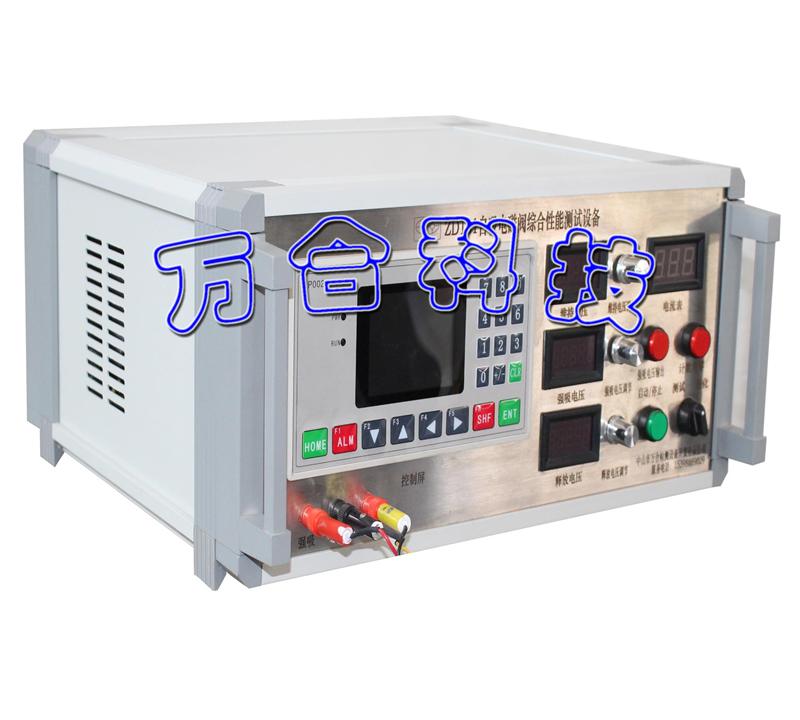
The WH-RS01-239 is designed to test solenoid valves under realistic conditions, not just dry cycling on a bench.
1. Test Media: Water – Many solenoid valves control water flow in real applications. Testing with water (not just air) reveals leakage, seal performance, and corrosion issues that dry testing would miss.
2. Adjustable Test Pressure (0.1–1.0 MPa) – Water pressure varies by application. The WH-RS01-239 lets you test at low pressure (0.1 MPa) to simulate gravity-fed systems, high pressure (1.0 MPa) to simulate mains or booster pump systems, and anywhere in between.
3. Adjustable DC Power Supply (0–30V) – Solenoid coils are rated for specific DC voltages (3V, 5V, 6V, 12V, 24V, etc.). The built-in adjustable power supply eliminates the need for external power supplies and allows you to test undervoltage and overvoltage conditions.
4. Programmable Timing – Set pull-in (hold) time from 0–99.99 seconds and stop (off) time from 0–99.99 seconds independently. This allows you to simulate different duty cycles – from rapid cycling (e.g., 1 second on, 1 second off) to long-hold applications (e.g., 60 seconds on, 300 seconds off).
5. Adjustable Action Frequency (0–30 cycles/min) – Control how fast the valve cycles. Lower frequencies allow thermal recovery between cycles. Higher frequencies accelerate testing.
6. High Cycle Count Capacity (0–999,999 cycles) – Test valves to end-of-life or well beyond normal warranty requirements.
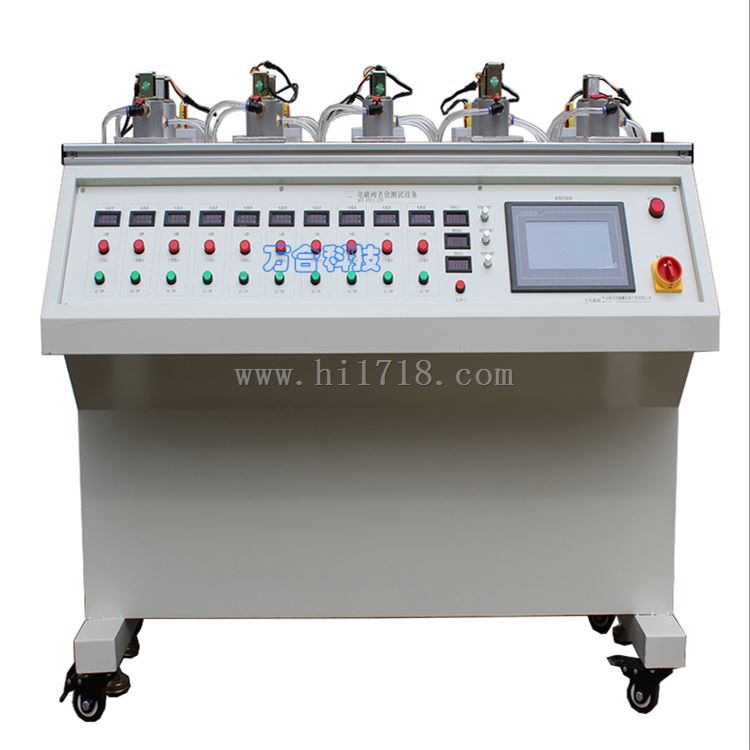
7. Multi-Station Configuration (1–10 stations) – Test one valve for detailed characterization, or test up to ten valves simultaneously for statistical confidence.
Why Up to 10 Stations Matters
Consider these three testing scenarios:
| Scenario | Single Station | 10 Stations (WH-RS01-239) |
|---|---|---|
| Test 100 valves for 50,000 cycles each | 100 sequential tests = 5M cycles | 10 batches of 10 parallel tests = 500K cycles |
| Compare 10 different valve models | 10 sequential tests | 1 test run |
| Supplier qualification (sample size n=10) | 10 sequential tests | 1 test run |
The time savings are dramatic – up to 90% reduction in total test duration.
Real-World Applications
Application 1: Gas Water Heater Solenoid Valves – Gas safety valves must close reliably even after years of thermal cycling. Using the WH-RS01-239, a manufacturer tested valves for 200,000 cycles under simulated gas pressure (using water as a safe proxy). The test revealed seal wear after 150,000 cycles, leading to a material upgrade before field failures occurred.
Application 2: Washing Machine Inlet Valves – These valves see daily cycling and variable water pressure. A washing machine manufacturer used the WH-RS01-239 to test valves from three different suppliers. One supplier’s valves failed at 80,000 cycles; another passed 250,000 cycles. The data drove a supplier selection decision.
Application 3: Industrial Process Valves – A factory tested replacement solenoid valves before installing them in a critical production line. The WH-RS01-239 identified a batch with inconsistent pull-in voltage, preventing a costly line stoppage.
Compliance and Standards
While the WH-RS01-239 is a flexible platform suitable for various test standards, it is particularly well-suited for testing valves used in appliances covered by:
-
GB6932-2015 (Household gas instantaneous water heaters)
-
GB2665-2015 (Energy efficiency for gas water heaters and furnaces)
-
IEC 60730 (Automatic electrical controls – including solenoid valves)
Conclusion
Solenoid valve failures are preventable – with proper aging testing before products ship. The WH-RS01-239 Solenoid Valve Aging Test Equipment gives you the tools to validate valve durability under realistic pressure, media, and cycling conditions.
Whether you manufacture solenoid valves, buy them for your appliances, or operate a test laboratory, the WH-RS01-239 delivers the accuracy, flexibility, and throughput you need.